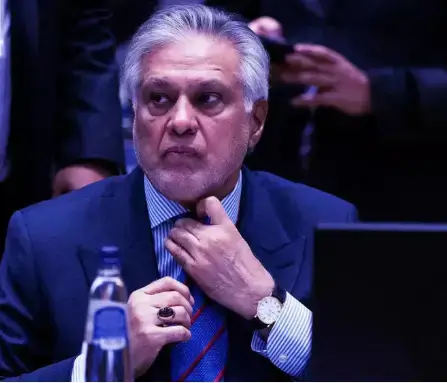
For decades, South Asia’s most volatile rivalry has been shaped as much by denial as by action. That pattern cracked this week when Pakistan’s Deputy Prime Minister and Foreign Minister Ishaq Dar publicly acknowledged that Indian precision strikes hit a sensitive Pakistani air base during the May military escalation. The statement, made during a year-end press briefing, may appear procedural on the surface—but strategically, it marks a meaningful shift.
In a region where narratives are often as important as missiles, such an admission carries weight far beyond the briefing room.
Why This Admission Matters
Pakistan has traditionally avoided publicly confirming successful Indian strikes on its military infrastructure. This time, however, Dar confirmed that the Nur Khan Air Base in Rawalpindi’s Chaklala area—one of the country’s most strategically located air force installations—was damaged, and that personnel were injured.
This acknowledgment matters for three reasons. First, it validates India’s claims about the effectiveness and reach of its May operations following the Pahalgam terror attack. Second, it undermines Islamabad’s long-standing strategy of information denial during crises. Third, it reshapes deterrence calculations by signaling that high-value targets inside Pakistan are no longer immune from precise retaliation.
In strategic terms, words spoken months later can still alter how future crises unfold.
The Strategic Significance of Nur Khan Air Base
Nur Khan Air Base is not an obscure military facility. Located near Pakistan’s capital and close to the army’s General Headquarters, it is a critical node for air mobility, command operations, and VIP transport. Any damage to this installation sends a message—not just tactically, but symbolically.
By acknowledging that this base was struck, Pakistani leadership has implicitly conceded that India was willing to escalate horizontally by targeting sensitive assets, while still keeping the operation limited and controlled. This reinforces the idea that India’s military doctrine now prioritizes precision and escalation management over broad-based retaliation.
Drone Warfare and the New Escalation Ladder
Dar’s remarks also shed light on the growing role of drones in South Asian conflicts. His claim that India launched dozens of drones over a 36-hour period—most of which were intercepted—highlights a key trend: unmanned systems are becoming the preferred tool for probing defenses, gathering intelligence, and delivering calibrated strikes.
Even if Pakistan intercepted most of the drones, the fact that one managed to inflict damage is strategically significant. Modern conflicts are not judged solely by interception rates, but by whether defenses can guarantee zero penetration. As militaries worldwide are discovering, that threshold is increasingly difficult to meet.
From Military Exchange to Diplomatic Reset
The May escalation followed a familiar trajectory: an attack on civilians, a retaliatory strike, cross-border exchanges, and heightened alert levels. What differed was how quickly the situation de-escalated. Pakistan’s military leadership reached out to India’s Director General of Military Operations, proposing a ceasefire that New Delhi accepted.
That outreach—now confirmed by both sides—suggests that the cost-benefit balance shifted faster than in previous crises. Satellite imagery later released by independent sources showing damage to multiple Pakistani air bases likely played a role in accelerating that decision.
When combined with Dar’s admission and earlier comments by Prime Minister Shehbaz Sharif, a pattern emerges: Pakistan’s leadership appears more willing to acknowledge military realities, even if doing so breaks with past practice.
What This Signals for the Future
This episode may influence how future crises are managed on the subcontinent. Public acknowledgment of damage can serve as a stabilizing factor, reducing the temptation to exaggerate success or deny setbacks. It also narrows the space for misinformation, which has historically fueled escalation.
For India, the admission strengthens the credibility of its deterrence posture—particularly its claim that it can strike terrorist infrastructure and military assets without triggering uncontrolled war. For Pakistan, it signals an awareness that strategic transparency, even when uncomfortable, may be preferable to outright denial in an era of satellite imagery and open-source intelligence.
A Subtle but Meaningful Shift
No single press briefing changes the trajectory of a rivalry as deep-rooted as that between India and Pakistan. Yet moments like this matter. They reflect how technology, media scrutiny, and precision warfare are forcing political leaders to recalibrate not just military strategies, but public narratives as well.
In South Asia’s nuclearized environment, realism—however delayed—can be a quiet form of restraint. Ishaq Dar’s remarks, intentional or not, may have nudged the region a small step in that direction.